

Andre Chen
•
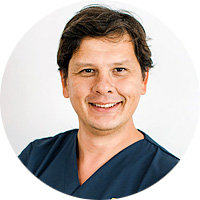
André Chen, DDS, MSc, PhD
Prof. André Chen is a clinician-academic based in Lisbon, Portugal, with a strong focus on implant-supported prosthodontics, digital workflows, and evidence-based clinical decision-making.
He graduated from the Faculty of Dental Medicine, University of Lisbon, and completed his PhD in Oral Medicine and Surgery. He pursued advanced postgraduate education in the United States, including a two-year structured implant training program in New York with a combined focus on Periodontology and Prosthodontics.
His professional activity bridges daily clinical practice with education, research, and scientific dissemination, with particular interest in the implant-prosthetic interface, marginal bone behavior, collar design, marginal bone behavior, and biologically driven treatment planning. He is particularly interested in how digital workflows can support- but not replace-sound prosthodontic principles.
Dr. Chen is the founder and clinical director of International Advanced Dentistry (IAD Lisbon), a multi-unit clinical and educational platform dedicated to advanced implant dentistry and prosthodontics. He is an ITI Fellow and serves on the ITI Iberia Leadership Team. He is also a Member of the Board of Directors of the European Society for Ceramic Implants (ESCI).
Prof. Chen is actively involved in postgraduate and continuing professional education and is a frequent invited speaker at national and international scientific meetings. His lectures emphasize critical thinking, biological principles, and long-term stability over rigid protocols, reflecting a contemporary and clinically grounded approach to implant- supported prosthodontics.
•
From Protocols to Principles: Decision-Making in Contemporary Implant-Supported Prosthodontics
Implant-supported prosthodontics is increasingly guided by predefined protocols and digital workflows that aim to standardize treatment and enhance predictability. However, clinical reality-particularly in both single-tooth replacement and full-arch rehabilitation— often presents biological, anatomical, and prosthetic variables that cannot be adequately addressed by rigid protocols alone.
This keynote lecture focuses on clinical decision-making in contemporary implant- supported prosthodontics, emphasizing the transition from protocol-based execution to principle-driven treatment planning. Through a series of clinical cases ranging from single-unit restorations to full-mouth implant rehabilitations, the lecture discusses how decisions related to implant positioning, prosthetic design, emergence profile, soft tissue management, and interface design directly influence long-term stability and maintenance.
Special attention is given to marginal bone behavior, the implant-prosthetic interface, and the interaction between surgical and prosthetic choices. Digital tools and guided workflows are presented as valuable clinical aids that can improve precision, while their limitations and potential biases are critically discussed.
By focusing on real clinical scenarios, complications, and long-term follow-up, this lecture aims to provide practical insight into how prosthodontic principles can guide individualized treatment decisions, ensuring predictable functional and biological outcomes across varying levels of clinical complexity.

