
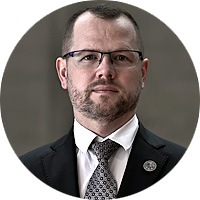
Jakub Suchánek
•
Professor Jakub Suchánek, MD, PhD, is a dentist and clinician-scientist specializing in dental stem cells and regenerative dentistry. He is Chair of the Department of Dentistry at University Hospital Hradec Králové and Charles University Faculty of Medicine in Hradec Králové, Czech Republic.
For nearly two decades, his research has focused on human dental pulp stem cells, including their isolation, cultivation, differentiation potential, and relevance for clinical use. His work aims to bridge fundamental stem cell biology with everyday dental practice, with particular emphasis on translational feasibility, safety, and regulatory limitations.
Professor Suchánek has authored or co-authored over 45 peer-reviewed scientific publications, including first-author articles and a book chapter on dental-related stem cell protocols published by Humana Press. His work has been cited more than 360 times (without self-citations), and his H-index is 11 according to Web of Science. He has been involved in multiple national, European, and industry-funded research projects, particularly in the field of regenerative approaches and hyaluronic acid–based biomaterials.
His professional focus lies in critically evaluating how far current stem cell research can realistically be translated into routine dental care.
•
From Theory to Practice: How Far Are We from Using Stem Cells in Dental Care
Stem cells have been presented as a future cornerstone of regenerative dentistry for more than twenty years. Despite impressive experimental data, their impact on everyday clinical dental practice remains marginal. This lecture critically examines why the transition from laboratory success to clinical reality has been so limited.
Human clinical studies involving cultured dental stem cells are rare and restricted to small pilot trials performed under highly specialized conditions. While some studies have demonstrated pulp-like tissue formation after autologous stem cell transplantation, these approaches require complex cell processing, strict regulatory control, and substantial financial resources. They have not demonstrated clear clinical advantages over established conventional treatments and remain inaccessible for routine dental care.
Many procedures commonly perceived as stem cell–based therapies, including regenerative endodontic techniques, do not involve stem cell transplantation at all. Instead, they rely on endogenous cell recruitment and growth-factor–mediated healing. Likewise, commercial dental stem cell banking is based on theoretical future applications rather than evidence-based clinical indications.
From a practical standpoint, the major obstacles include biological variability of stem cells, limited control over their behavior in vivo, unresolved safety and regulatory issues, and poor cost–benefit balance when compared with existing treatment options. In contrast, so-called cell-free regenerative approaches—such as bioactive scaffolds and hyaluronic acid–based materials—are already providing measurable clinical benefits in oral wound healing and tissue repair.
The lecture argues that dentistry is not on the verge of a stem cell revolution. Progress lies in critical evaluation, realistic expectations, and the development of regenerative strategies that fit clinical reality rather than experimental ambition.

