
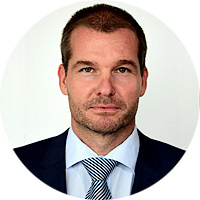
Lukáš Hauer
•
Assoc. Prof. Lukáš Hauer, MD, DMD, PhD (*1980), graduated from the Faculty of Medicine in Pilsen, Charles University, with Master’s degrees in Dentistry (2004) and General Medicine (2007). He has been based at the Department of Stomatology, Faculty of Medicine in Pilsen, Charles University and University Hospital Pilsen since 2007. He achieved board certification in Oral and Maxillofacial Surgery in 2015, was awarded the PhD degree in 2016, and was appointed Associate Professor (Docent) of Dentistry in 2020. Since 2021, he has served as Head of the Department of Stomatology, Faculty of Medicine in Pilsen, Charles University and University Hospital Pilsen. Since 2022, he has also held the position of Vice-Dean for Dental Education at the Faculty of Medicine in Pilsen, Charles University.
He is a member of the Scientific Boards of the Faculty of Medicine in Pilsen, Charles University and the Czech Dental Chamber, the Ministry of Health’s Educational Board for Dentists, several specialist certification committees, and the editorial board of the Czech Dental Journal. He serves on the governing bodies of professional societies, including the Czech Association for Maxillofacial Surgery and the Medical Society in Pilsen (both within the Czech Medical Society J. E. Purkyně, ČLS JEP). He is Chair of the Accreditation Committee for Oral and Maxillofacial Surgery, Vice-President of the Czech Oral Surgery Society, and the Czech Republic’s representative (Councillor) to the European Association for Cranio-Maxillo-Facial Surgery (EACMFS). At the Faculty of Medicine in Pilsen, Charles University, he is the guarantor of both the Master’s and PhD programmes and several specialty-training programmes, and is actively involved as a lecturer and supervisor. Within the Czech Dental Chamber’s continuing professional development system, he lectures in multiple courses and serves on examination boards for professional certification.
His clinical and research interests focus on orofacial cancer surgery (including reconstructive surgery), jawbone pathology, trauma surgery, and inflammatory diseases of the orofacial region. He has authored or co-authored more than 70 peer-reviewed publications (citations excluding self-citations: WoS/Scopus 447/613; h-index 9/10), delivered over 140 presentations at national and international congresses, and has been involved in the leadership, coordination, and implementation of numerous research and development projects. He also contributes to the long-term organisation of congresses and scientific meetings held by professional societies, the Czech Dental Chamber, and his home institution.
•
Patient-Specific Subperiosteal Implants 2.0 in Prosthetic Rehabilitation: Current Evidence and Limitations
Advanced atrophy of the alveolar process and extensive combined hard- and soft-tissue defects of the jaw following implant explantation or ablative cancer surgery substantially complicate fixed prosthetic oral rehabilitation. In clinical scenarios in which augmentation procedures or endosseous implant placement would be disproportionately extensive, or are not feasible, modified subperiosteal implants are re-emerging as a valuable alternative. Patient-specific titanium frameworks that accurately replicate the jaw anatomy enable immediate functional rehabilitation while reducing the overall invasiveness of the surgical approach. Short-term outcomes report high survival rates (95–98%); however, soft-tissue complications, particularly exposure and infection, remain frequent, and robust long-term data are lacking. The lecture summarizes indications, the surgical–prosthetic workflow, and the most common complications. The role of this technology within contemporary implantology is discussed.

