


Osamu Komiyama
•
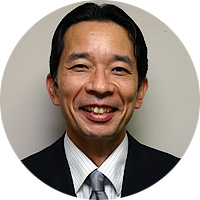
Dr. Osamu Komiyama
D.D.S., Ph. D
Professor and Chair
Department of Prosthodontics and Oral Function, Nihon University, Japan
Osamu Komiyama received the degree in Doctor of Dental Science from the Nihon University, Japan, in 1989, and served as an instructor at the Department of Complete Denture Prosthodontics. After that, he obtained a Ph.D. degree in Dental Science from the Nihon University in 1998. He served as an assistant professor at the Department of Comprehensive Clinical Dentistry, School of Dentistry at Matsudo, Nihon University in 2002, and was a visiting Professor at Catholic University of Leuven from 2003 to 2005 as host Professor Antoon De Laat in Belgium. He is currently a Professor and chair at the Department of Prosthodontics and Oral Function, School of Dentistry at Matsudo, Nihon University, and the Past President of a Neuroscience Group of the International Association for Dental Research. His research interests include the development of new somatosensory functional evaluation method in the trigeminal region, clinical neurophysiological evaluation of masticatory function, experimental characterization of orofacial pain patients, and the relation among brain functions, jaw movement, and force control with prosthodontic treatment.
•
Overload of dental prosthesis - parafunctional effects and the central nervous system.
Various esthetic prosthodontic treatments including dental implants are more prosperous than ever with the evolution of dental technology. However, there is general agreement that excessive stress to the prosthesis may result in overload of the human tissue and physical failure of the prosthodontic structure. Many clinicians believe that overload of a dental prosthesis is a risk factor for bone loss and/or may be detrimental for the suprastructure in implant prostheses. It has been documented that occlusal parafunction such as bruxism (tooth grinding and clenching) affects the outcome of prostheses, and those parafunctions are initiated in the central nervous system. During occlusal examination of the patient, the occlusal contact area and the bite force of a patient provide valuable information for prosthodontic treatment and its prognosis.
In the past paper on the central nervous system, we clarified that the masticatory inhibitory reflex, as a brainstem reflex to interrupt tooth clenching, has a wide variety of appearance threshold individually following stimuli with increasing intensity. We also demonstrated that repeated and standardized tooth clenching tasks triggered significant neuroplastic changes in the corticomotor control of jaw-closing muscles but not of a hand muscle. On the other hand, in previous papers, we showed that sleep deprivation was associated with alterations in sleep-related physiological conditions and concurrent changes in stress, sleep and awake bruxism. These observations suggest that sleep-related conditions may influence the manifestation of bruxism across both sleep and wakefulness, and that modifying sleep schedules as part of a lifestyle approach may contribute to improved management strategies for both sleep and awake bruxism.
In this lecture, the importance of brain functions and force control in prosthodontic treatment will be discussed to prevent the failure of esthetic prosthodontic treatment.

